Saturday, February 23, 2013

CHAPTER 11- MAKING THE MOST OF COMMUNITY RESOURCES AND FIELD TRIPS

Planning a field trip includes the following steps;
1.Preliminary planning by the teacher
2.Preplanning with others going on the trip
3.Taking the field trip itself
4.Post-field trip follow up activities

                            Field Trips bring us to the world beyond the classroom. The real world connection is more work but the benefits of broadening teaching beyond textbooks far outweigh the little bit of time it takes from a teacher's schedule.
Disadvantages of field trips are;
1.It is costly
2.It involves logistics
3.It is extravagant with time and contains an element of uncertainty.

INSIGHTS AND REACTION:

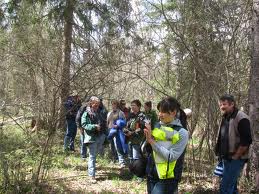
                             Field Trips connect people. People involved are students,teachers,parents,school head. Resource persons in the community are brought to the school as key informants in an interview by children or as lecturers. Opening school doors to parents,officials,and other members of the community are rich learning resources.
                             Although field trips are expensive but considering the intensity and the extent of concrete experiences, students and teachers were encouraged to use them. Preparation and Planning for the field trip also includes discussions and decisions on what to do before the field trip, during the field trip, and after the field trip.
                            Field Trip is fun and educational. Field Trips are opportunities for rich and memorable experiences which are fundamental to learning that lasts. It is not only meant for the social science subjects. It is for all other subjects as well. It can bring about a lot of realizations which may lead to changes in attitudes ani insights. The field trip can nurture curiousity; build a zest for new experience, and a sense of wonder.
                           But there are also disadvantages in a field trip. One is it is costly, it involves logistics, it is extravagant with time and contains an element of uncertainty.Field trip is good if it's for educational and knowledgeable, but bane if it's use for pleasure and fun...     


Thursday, February 21, 2013

LESSON -10 DEMONSTRATIONS IN TEACHING

.


                     Demonstrations is very handy. It requires no elaborative preparation and yet as effective as the other instructional materials when done properly. Guiding Principles in using a demonstration as a teaching-learning experience:

1.Establish rapport- Great the audience. Make them feel at ease by your warmth and sincerity. Stimulate their interest by making your demonstration and yourself interesting. Sustain their attention.
2.Avoid the COIK fallacy (Clear Only If Known)- It is the assumption that what is clear to the expert demonstrator is also clearly known to the person for whom the message is intended. To avoid the fallacy, it is best for the expert demonstrator to assume that his audience knows nothing or a little about what he is intending to demonstrate for him to be very thorough,clear and detailed in his demo even to a point of facing the risk of being repetitive.
3.Watch for key points- The ones @ which an error is likely to be made, the places @ which many people stumble and where the knacks & tricks of the trade are esp.important

INSIGHTS AND REACTION:

                       Field Trips connect people. People involved are students, teachers, parents, school head. Resource persons in the community are brought to the school as key information in an interview by children or as lecturers. Opening school doors to parents, officials & other members of the community are rich learning resources.
                       Although field trips are extensive but considering the intensity and the extent of concrete experiences, students and teachers were encouraged to use them. Preparation and Planning for the field trip also includes discussions and decisions on what to do before the field trip, during the field trip and after the field trip.
                       Field Trip is fun and educational. Field trips are opportunities for rich and memorable experiences which are fundamental to learning that lasts. It is not only meant for the social science subjects. It is for all other subjects as well. It can bring about a lot of realizations which may lead to changes in attitudes and insights. The field trip can nurture curiosity; build a zest for new experience, and a sense of wonder.
                      But there are also disadvantages in a field trip. One is it is costly, it involves logistics, it is extravagant with time and contains an element of uncertainty.
         

Friday, February 15, 2013

LESSON 9-TEACHING WITH DRAMATIZED EXPERIENCES


                  Something dramatic is something that is stirring or affecting or moving.Dramatic experiences range from the formal plays,pageants to less formal tableau,pantomime,puppets and role-playing.

                   Plays depict life,character or culture or a combination of all three.It portrays vividly important ideas about life.

                   Pageants are usually commonly dramas that are based on local history presented by local actors.

                   Play and Pantomimes requires much time in preparation and so it cannot be part of everyday classroom pictures.

                   Pantomime and Tableaux are less demanding in terms of labor,time and preparation.These are all visual experiences.

                   A Pantomime is the art of conveying a story through bodily movements only.It's effect on the audience depends on the movements of he actors.

                   A tableau is a picture like scene composed of people against a background.It is often used to celebrate Independence day,Christmas and UN.


INSIGHTS AND REACTION:
                   Dramatic experiences give students' multiple intelligencies.Such experiences are plays,pageants,pantomimes,tableaus,puppets,and role-playing.Musical Intelligence is musical when accompanied by a music.These cannot be done alone.It needs a companion.Intelligent students have no difficulty relating and working with people.Role-Playing is the most effective in the affective domain.
                   Learning should be fast,absorbed and enhancing if accompanied by a certain dramatic experiences such as role-playing.
.

.                  


Friday, February 8, 2013

LESSON 8- TEACHING WITH CONTRIVED EXPERIENCES


                         If direct experiences cannot employ as materials for instruction,a contrived experience is used. Under these contrived experiences are te model of the atom,the globe,the planetarium the simulated election process and the preserved specimen. This is the second band of experiences in Dale's Cone of Experience. These are edited copies of reality used as substitutes for real thing in the classroom.

                         Models such as atom,the planetarium. A model is a reproduction of a real thing in a small scale or large scale or exact size but made of synthetic material. It is a substitute for a real thing which may or may not be operational.

                         Mock up such as the planetarium,It is an arrangement of a real device or associated devices. A mock up is a special model.

                         Preserved Specimens are specimens and objects.Specimen is any individual or item considered typical of a group,class or whole.

                         Simulation such as school election process.It is a representation of a manageable real event in which the learner is an active participant engaged in learning a behavior or in applying previously acquired skills or knowledge.

                         Game is another example of contrived experiences.Games are played to win while simulations need not have a winner.


INSIGHTS:

                  Contrived Experiences is used in the absence of direct experiences as materials for instruction.We make use of this contrived materials to overcome limitations of space and time,to edit reality for us to be able to focus on parts or a process of a system that we intend to study,to overcome difficulties of size,to understand the inaccessible,to help the learners understand abstractions.While we use simulations and games to make classes interactive and to develop the decision making skills and knowledge construction skills of students.
                  Learning should be more enhancing if there is simulations,mock ups and games used.

LESSON 7- DIRECT,PURPOSEFUL EXPERIENCES AND BEYOND

Direct Purposeful Experiences is the instructional material here...

INSIGHTS:

                    This entails us that whatever kinds of technology,we don't know how to use,how to operate or how does it benefitted to mankind. We couldn't be able to know a certain device if we don't give ourselves a try. If we are always depending on others who is expert for a particular thing,then,we will remain unskilled and novice. But if you give time to yourself practicing and exploring a certain thing.it will eventually develop. Skills in a certain thing will be eventually develop until mastery achieved.

                     There is a saying that goes "Constant Practice Makes Perfect". Just keep on practicing,keep on surfing until mastery acquired. You can learned by doing. It is a natural thing to experience that you learn from your mistake and correct it if possible. The concept of positive and negative discrimination indices became fully understood only after the actual experience of item analysis. All these things or experiences needs to use,whatever we can,direct,purposeful experiences in the teaching-learning process.
                     This is said to be purposeful because the experiences are not purely mechanical. These are experiences that involve asking questions that have significance in the life of the person. These experiences undergone in relation to a purpose by learning. This means that this must not be the period or the dead end. This is more of hands-on,minds on and hearts on approach. This means that thoughts or meanings following reflection run the risk of a lesson,direct experience should be more knowledgeable and effective.
                      This implicates that we give students or fill in their minds in a way of learning by doing.Give them outside activities.        


Monday, January 7, 2013

LESSON 6- USING AND EVALUATING INSTRUCTIONAL MATERIALS

                  Field Trip is one of the instructional materials used to attain instructional objectives. It is not enough to bring the class out for a field trip and make them observe anything or everything or use other instructional materials for no preparation and clear reason at all. The materials used must have a true picture of the ideas presented. The material must have a meaningful content of the topic study. The material must be alligned to the curriculum standards and competencies. The material must be culture and grades must be sensitive. The material must have culture bias. The material must be appropriate for the age,intelligence and experience of the learners. The physical condition of the material must be satisfactory. There is a teacher's guide to provide a briefing for effective use. There must be a question material to help students think better and develop their critical faculties. Exposure to mass media is highly important to maintain and strengthen rational powers. The use of material should be make of help to collaborate with one another. The material must have promote self-study. The material should be time worthy,expense and effortly involve.


INSIGHTS AND REACTION:

                This lesson is more comprehinsible. Since it involve materials,how to evaluate instructional materials. Teachers must have a good idea of their objectives so that they can set effective materials to be presented to the class so that students learned more skills or knowledge pertaining to the topic or lesson. For instance,doing a class field trip is not as easy and quick step to come forward. Of course,first thing to do is to think Why?Is there a good lesson learn?Is having a field trip knowledgeable and brain boasting? It is right to know the aim before proceeding to a certain task.Does having a field trip affordable or expensive?Then,if it's affordable,why not proceed...most important is, it should be educational and mental enhancing.
It is indicated here the proper use of materials,the 3 Ps' and 1 f. First is Prepare yourself, 2nd is Prepare your student, 3rd is Present the material and lastly is Follow up.
               In preparing ones' self,know the lesson objective and learn what you expect from the class after the session and ask yourself why you have selected such particular instructional material. Plan is important,what kind of questions to ask,how to evaluate learning and how you will tie loose ends before the bell rings.
              In presenting the material,do not be guilty of the R.O.G. syndrome or "running out of gas", this barely means poor planning. Do not practice R.O.G.syndrome for this results to a dull,boring and ineffective ability and skill performance of your students.
              Follow up. Always bear in mind that by setting instructional material you used,it should not be a way of killing your time nor giving yourself a break. Use the instructional for the lesson attainment of a lesson objective. The best thing to do is to follow up to find out if objective was attained or not.                              

LESSON 5- THE CONE OF EXPERIENCE


                          Media and Material are the 2 M's or the elements of this cone of experience.
The Cone of experience is a visual model,a pictorial device that presents bands of experience arranged according to degree of abstraction and not degree of difficulty. The farther you go from the bottom of the cone,the more abstract the experience becomes.
                         Dale asserted that "the pattern of arrangement of the bands of experience is not difficulty but degree of abstraction-the amount of immediate sensory participation that is involved. A still photograph of a tree is not more difficult to understand than a dramatization of Hamlet. It is simply in itself a less,concrete teaching material than the dramatization. He further explains that "the individual bands of the Cone of experience stand for experiences that are fluid,extensive and continually interact. it should not be taken literally in its simplest form.

INSIGHTS AND REACTION:

                        This lesson implicates that teachers must used several or different medium to students. It needs adequate foundation of concrete experience before moving to the abstract experience. Edgar Dale's Cone of Experiences is a visual representation of learning resources arranged according to degree of abstractness. The farther you move away from the base of the cone,the more abstract the learning resources becomes.
                      Computer system were not yet a part of educational or home settings. In order for the student to comprehend precisely,never stuck in the concrete,it must be moving to the abstract. in this way,it makes the learner finds easy and quickly concentrate on their penetration which is suitable for their learning process. It could no longer hamper students higher thinking skills. It indicates that teachers must use different or several combination,examples of a learning resources before proceeding to the abstract.
                     Learning here is a cycle. It might be from the concrete to the abstract,from the abstract to the concrete and vise versa.